Building a design chapter from scratch
Starting with no dedicated team or funding. Leadership by proving value at every step.
- Leadership and people
- Design systems
- Product Design
- Enterprise delivery

My role - Head of Design, Elevate Design System, NAB
I was Head of Design and the founding leader of the discipline. There was no design system team when I started, so the role was to build the team, the operating model, and the investment case to grow it, at the same time as the system itself. Over time I grew the chapter from 3 people to 15, spanning design, engineering, content, and accessibility, across Australia, Vietnam, USA and India.
My leadership - key results
Growth
3 → 15
Growth, AU/VN/USA/India
People, across a multidisciplinary chapter grown from three designers to fifteen.
Reuse value
$7.75M+
Reuse value in FY1
Combined design and engineering reuse value, tracked through a custom-built reuse calculator.
1000+
Engineers
250+
Designers
20+
Product teams
8+
Brands
90% eSat
Engagement
My approach - prove value early, then scale
-
01
Started small
Attached my team and our work to projects that we could pilot with, and validate impact before pushing for additional headcount.
-
02
Measured results rigorously
Built a custom reuse calculator to continuously communicate value. FY1 resulted in $7.75M+ in combined design and engineering savings, establishing a baseline of proven results for future investment conversations.
-
03
Combined numbers with narrative
Used strategic storytelling alongside the numbers to raise visibility across leadership on why the work mattered.
-
04
Secured annual backing
Leveraged initial metrics and strong leadership relationships to get approval for team growth every financial year.
-
05
Built organic adoption
Generated widespread internal demand for both the design system and the specialist skills of the team.
-
06
Operated a self-sustaining funding model
Charged specialist time back to supported project budgets, generating an internal credit balance.
-
07
Reinvested surplus into key hires
Spent down the internal credit positive balance to hire roles other teams lacked capacity to recruit, including dedicated accessibility specialists, front-end engineers, and content designers.
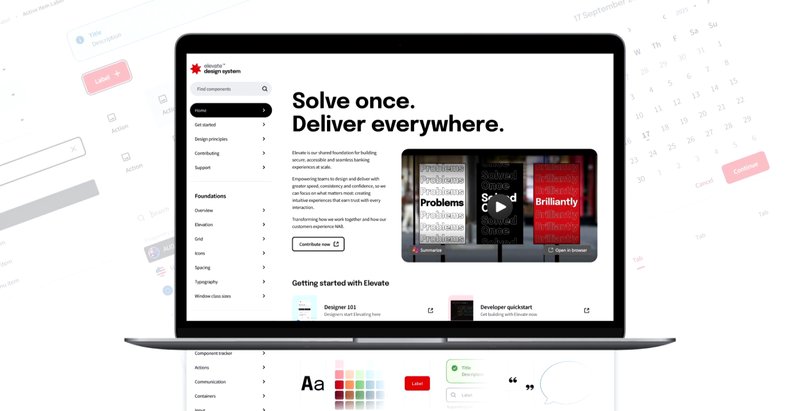
I grew and scaled Elevate to enterprise coverage
15 people across design, engineering, accessibility, product and content
8 brands
Foundations, Core and Component sets, in-sync
React, React Native, AEM, Android and iOS
Fully documented, AI-ready site
90%
Australia, Vietnam and India
What I would do differently
-
01
Target long-term operational funding early
Push for Opex over Capex: Requesting core engineering funding directly from BAU or Opex budgets rather than project-by-project funding would have given us much needed stability.
-
02
Protect team knowledge and IP
Mitigate key-person risk: Contractor reliance meant critical institutional knowledge frequently walked out the door at the end of an SOW. A permanent headcount model would have kept that expertise in-house.
-
03
Reduce administrative friction
Minimize operational overhead: Moving away from contract-heavy setups would have saved a lot of administrative effort, from managing constant renewals and contracts to dealing with separate IT support models for non-permanent staff.